

Object Record
Images
Metadata
Catalog number |
98.4.5 |
Artist |
Unknown |
Title |
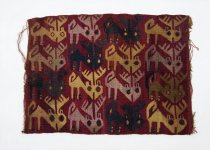
Hand woven bag panel decorated with rows of deer |
Date |
1100-1300 AD |
Object Name |
Bag |
Description |
Bag panel or fragment decorated with rows of deer. The well-known monumental desert petroglyphs, the Nasca lines often represent animals in large and abstracted forms, with little curvilinearity or naturalness of structure. This may be a result of technical determinism, that is, the limitations of creating large artworks from stones and sand. But textiles such as the bag panel indicate this was an aesthetic preference. While earlier Nasca textiles were painted in bright colors and curvilinear designs, this later-period textile fragment introduces iconography and design that can be compared to the large earthworks and to early textiles from the region as well as Paracas textiles. Renee McGarry, " Nasca and Moche Ceramics," in "Natural and Supernatural: Andean Textiles and Material Culture," (G -T M, Queens College, CUNY, February 14-June 1, 2006), 17. |
Medium/Material |
Camelid fiber, natural dyes |
Dimensions |
W-8 L-12 inches |
Year Range from |
1100 |
Year Range to |
1300 |
Exhibition and Publication History |
* Amy Winter, ed. "Natural and Supernatural: Andean Textiles and Material Culture," ex. cat. G -T M, Queens College, CUNY, September 8 - October 24, 2009. |
Culture |
Nasca/Huari/Peruvian |